


On Opens in Vienna, and Makes Heritage the Architecture of Community.

A 230 sqm store on Neubaugasse trades sportswear minimalism for Jugendstil colour and weathered copper, then builds the whole layout around the local running club rather than the till.
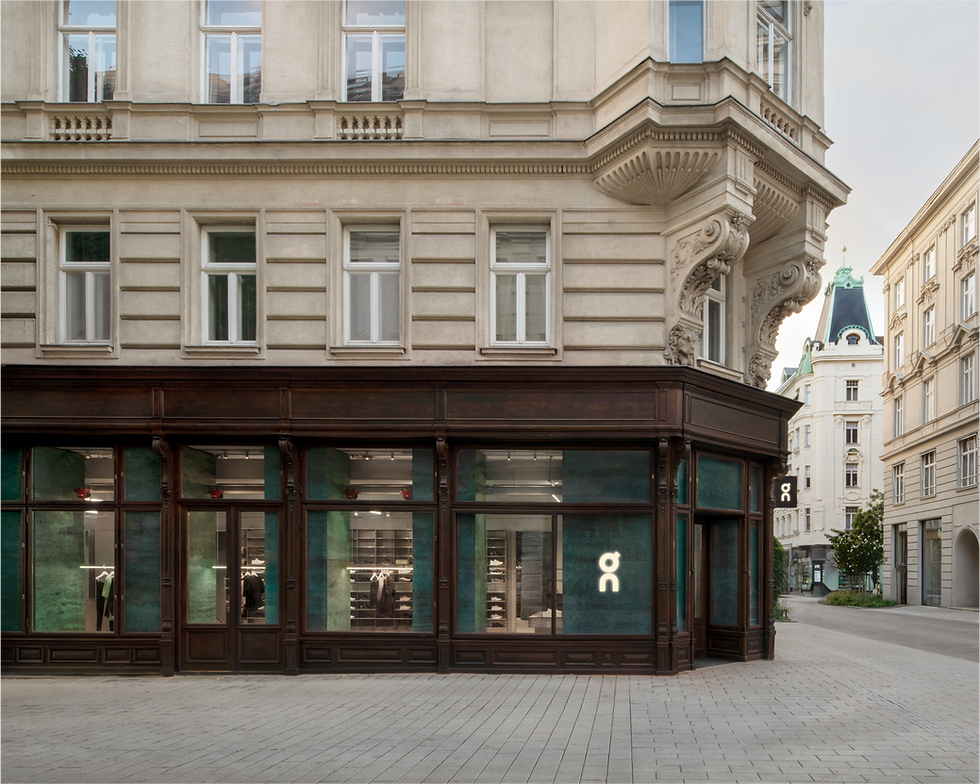
Most sportswear retail leans on one of two moves: neutral white-box minimalism, or a loud graphic takeover of the brand's own identity. On's new Vienna store does neither. Instead it lets the city argue its case first, then lets the brand answer back in contrast, and the tension between the two is the whole point.
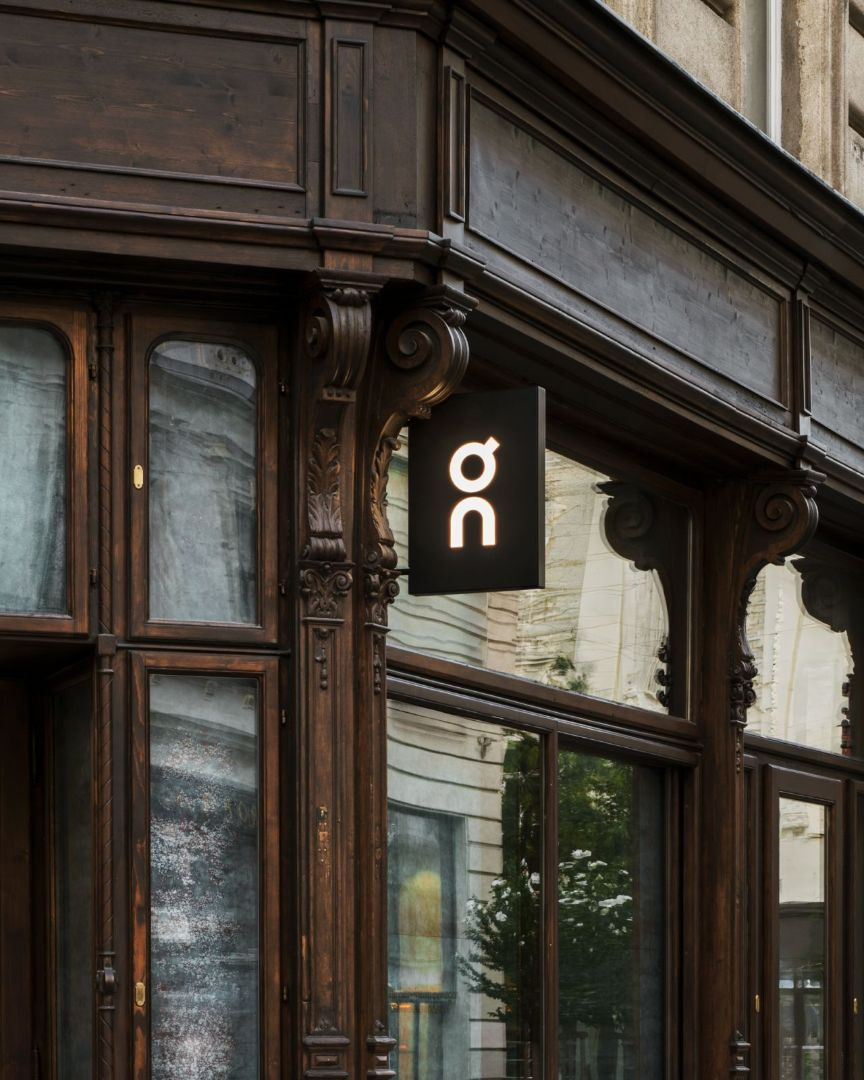
The address matters as much as the architecture. On took a 230 sqm ground-floor unit inside a listed 19th-century building on Neubaugasse, a street built on independent boutiques and secondhand shops rather than flagship-scale retail. The street-level woodwork, with its ornate Biedermeier detailing, has been restored rather than stripped out or hidden. That restraint is itself a statement: On is not asking Vienna to make room for a global format, it is asking to be let into a street that already has its own identity.

Inside, the brand answers the heritage with a careful, researched palette rather than a corporate one. Jugendstil colourways, nods to Otto Wagner's facade work, and the blotchy green of weathered copper roofing appear as cladding on the structural columns, which are then threaded together with exposed metal beams carrying lit apparel racks. A tiered, mirror-finish shoe wall and a concrete stucco back wall keep the materials industrial rather than decorative. The de Sede Snake sofa and bench anchor the centre of the room, turning the sales floor into a place built for sitting down, not just passing through.

That's the real strategic move: the store is designed to host a running club meeting as comfortably as a shoe purchase. The seating, the open sightlines, and the absence of a conventional till-focused layout all signal that lingering and gathering are the intended use of the space, not a side effect of good design. For a brand whose growth has been driven by community-level running culture rather than mass advertising, this is the physical infrastructure for that strategy made literal.

The approach sits inside a broader pattern. Aesop has long proven that letting a neighbourhood's materials and history shape a store interior builds more credibility than importing a global template. Rapha did something similar for cycling, using clubhouses as much as shopfronts to build loyalty. On's difference is doing this at a moment of rapid international expansion, where the easy move would be to replicate what already works elsewhere. Choosing Neubaugasse over a more conventional high street, and restoring rather than rebranding the facade, suggests a studied respect for local context that is harder to execute at scale than it looks.

The learning for other brands expanding into new markets: heritage is not wallpaper. When a city's own architectural language is treated as material rather than backdrop, and the store is built to host people rather than simply sell to them, the result reads as rooted rather than parachuted in. Measurement here won't be footfall alone, it will be whether the local running community treats the space as theirs.


Comments