Outcast Turns The Convenience Store Into A Festival Content Engine.


When The Brand World Becomes The Store
There is almost nothing convenient about Outcast’s Inconvenience Store, and that is precisely the point. The Australian fashion brand takes one of retail’s most ordinary formats, the neighbourhood convenience store, and rebuilds it inside San Francisco’s Portola Music Festival as a deliberately chaotic extension of the night out.
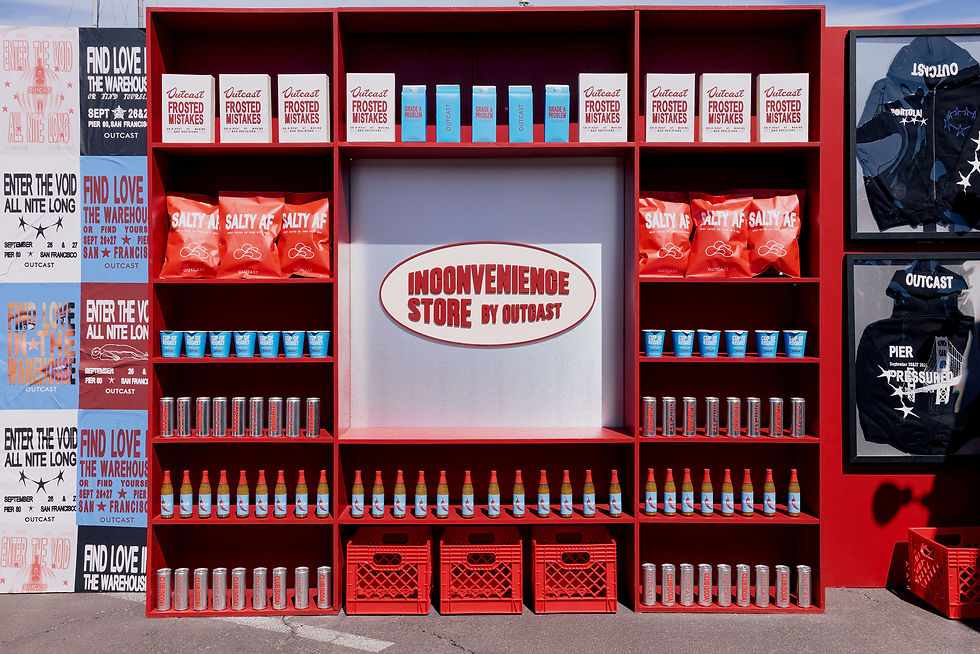
Frosted Mistakes cereal sits beside Salty AF chips, Cup of Regret noodles, Grade A Problem milk, Club Soda and Red Hot Flag sauce. Refrigerators contain handbags, knee-high boots, disco balls and martini glasses alongside drinks. Shopping baskets promise “Everything You Need” and “Nothing You’re Looking For”.
It is funny, knowingly messy and instantly understandable, but underneath the visual joke is a smart piece of brand strategy. Outcast is not creating a generic festival activation and applying its logo afterwards. It takes the behaviours, language and attitude of its customer, dressing up, going out, making questionable decisions, documenting the night, and turns them into a physical world.
For a digitally native fashion brand built around nightlife, festivals and self-expression, that distinction matters. The space does not simply advertise Outcast. It behaves like Outcast.
“The strongest brand worlds do not just look like the brand. They behave like the people the brand is trying to reach.”
The Product Is Culture, Not Just Clothing
What makes the 20-by-20-foot footprint interesting is how much Outcast asks it to do. The format operates somewhere between a bodega, merchandise stand, gifting station, campaign set and content studio, with each element contributing to the same story. At Club Concessions, visitors collect chrome lighter covers, pill boxes, matchbooks, buttons, festival bingo cards and co-branded condoms. A receipt-style photo booth creates a physical souvenir. A refrigerator conceals a fisheye camera that records a four-second clip and transfers it directly to the visitor’s phone. An exclusive festival hoodie extends the idea into something wearable, while the grocery packaging turns disposable objects into pieces of brand language. This is an important distinction from the wave of branded corner shops and newsstands we continue to see across fashion and beauty. The convenience-store aesthetic has become an increasingly familiar experiential shorthand because it is democratic, nostalgic, product-rich and naturally suited to browsing. But Outcast makes the format work harder by connecting it directly to the rituals surrounding its clothes. The cereal, condoms, cigarettes, club soda, mirrors and afterparty references are not random props. Together they construct a recognisable version of the Outcast customer’s night.